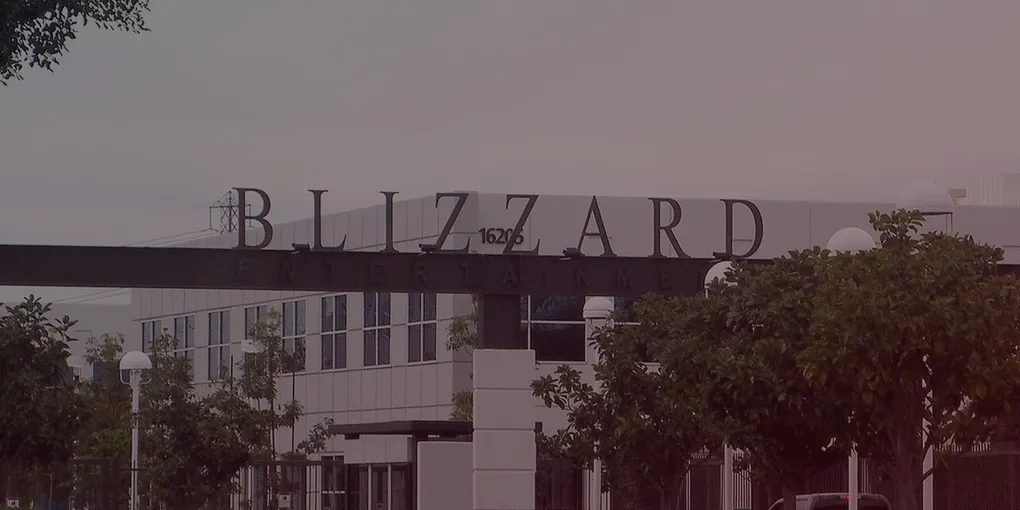
Blizzard Workers Ratify Union Contract Covering 1,900 Employees at Microsoft
Blizzard workers just secured the broadest union contract the video game industry has seen. Members of the Communications Workers of America (CWA) ratified a new agreement with Microsoft on September 9 that covers 1,900 employees across nearly every unionized team at the studio — from World of Warcraft and Overwatch to Diablo and quality assurance.
From team-by-team to one contract
Blizzard’s unions didn’t start out unified. Since 2024, workers organized studio by studio and team by team — Overwatch, Diablo, World of Warcraft, Story & Franchise Development, Platform & Technology, and QA all voted to unionize separately, with Microsoft voluntarily recognizing each one under a neutrality agreement CWA had negotiated. That piecemeal structure meant repeated, team-by-team negotiations. The new contract folds those units into three consolidated bargaining groups going forward — one of them combining all of World of Warcraft with Blizzard’s QA and Hearthstone teams — so future talks won’t have to restart from scratch with every group.
It’s also the fourth contract Microsoft has now signed with a union at one of its game studios, following earlier agreements covering ZeniMax QA testers, Raven Software, and a smaller Blizzard QA unit reached earlier this year. That QA contract, covering roughly 60 workers across Albany, New York and Austin, Texas, took about two years of bargaining before it was ratified — a pace the new, much larger contract was clearly designed to avoid repeating for every future unit. This is the biggest of the four by a wide margin, and the first to bring nearly all of Blizzard’s organized workforce under one negotiating framework at once.
AI has to be bargained over first
The contract’s headline provision addresses a fear that’s been building across the industry all year: that AI tools get rolled out unilaterally, with no input from the people whose jobs they touch. Under the new agreement, any AI implementation that would materially affect union-covered work has to be bargained over with Microsoft before it can be put into practice — not disclosed after the fact, not offered as a take-it-or-leave-it policy, but negotiated in advance.
Layoff protections with real teeth
The contract also introduces what CWA is calling an industry first: laid-off union members get 14 months of recall rights, meaning they have first claim on open positions across any Blizzard bargaining unit during that window. Beyond that, the deal locks in a required 60-day notice period before layoffs (or pay in lieu of it) and guarantees one week of severance for every six months an employee has worked at the company. Workers also secured a three-day hybrid work schedule, wage increases, remote-work and disability accommodations, and formal grievance procedures.
How Blizzard got here
The path to this contract ran through several standalone organizing drives. Overwatch developers formed a nearly 200-person union in 2024, one of the first teams at Blizzard to do so. Diablo’s team followed after a round of layoffs and mounting frustration over pay and AI use. World of Warcraft, Hearthstone, and Blizzard’s Platform & Technology group organized on similar timelines, and Battle.net staff unionized as Microsoft’s neutrality agreement with CWA was set to expire — each addition making the case for a single, consolidated contract stronger than negotiating unit by unit ever could.
Why the timing matters
None of this is happening in a vacuum. Microsoft has cut thousands of jobs across its gaming division over the past two years, and the broader industry has spent 2026 cutting headcount even as revenue hits record highs — the same tension underpinning our look at gaming’s record profits, record layoffs paradox. A contract that guarantees recall rights and advance bargaining over AI is a direct response to exactly that climate: workers watching studios shrink and automate around them, and negotiating protections into a legally binding agreement rather than hoping goodwill holds.
It’s also a signal for the rest of the industry. Blizzard’s unions took roughly two years to get from the first team organizing to this consolidated contract, and reporting on the negotiations has described Microsoft as stalling for much of that stretch. Now that the template exists — AI bargaining rights, recall protections, a streamlined multi-unit structure — other studios watching their own teams organize have a concrete precedent to point to, for better or worse, the next time contract talks start.
For more on how Microsoft’s gaming division has been reshaping itself this year, see our coverage of Xbox’s 2026 restructuring and studio spinoffs.