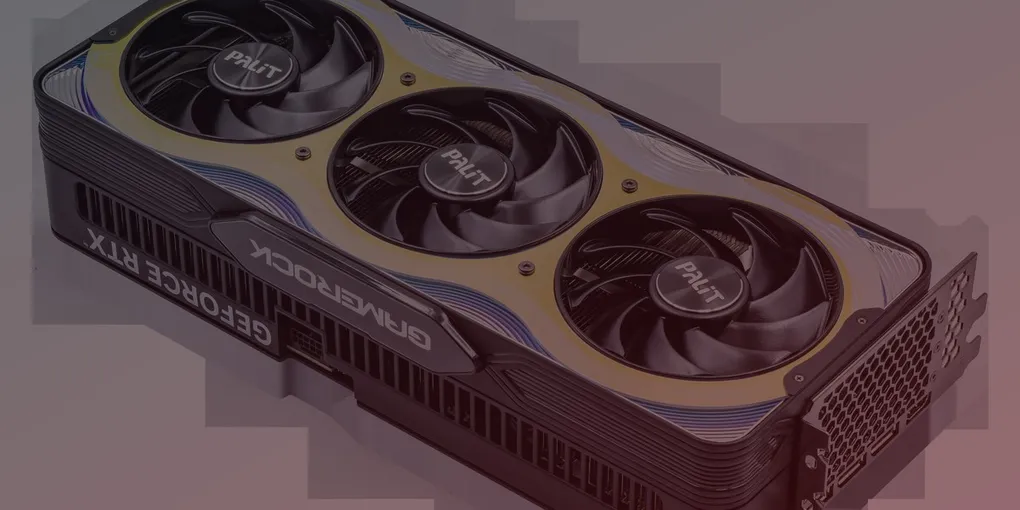
RTX 5090 Vanishes From US Retailers as AI Buyers Push Prices Toward $9,600
If you’ve been waiting for a sane price on Nvidia’s flagship graphics card, the wait just got longer. The RTX 5090 — a $1,999 GPU at launch in January 2025 — is now out of stock at every major US retailer, and the listings that remain are selling for as much as $9,600.
Where the stock actually went
Amazon, Newegg, and Best Buy are all showing the RTX 5090 as unavailable direct from Nvidia’s usual retail channels. What’s left comes almost entirely from third-party marketplace sellers, and those prices have detached from reality: multiple listings now clear $6,000, and at least one tracked by VideoCardz hit $9,600 — nearly five times the card’s original MSRP. Pricing didn’t jump all at once, either. According to PCGamesN, RTX 5090 prices climbed roughly 40% between July and August 2026 alone, before the more recent spike pushed things further.
The culprit isn’t gamers. Hong Kong hardware outlet HKEPC reported spotting “hundreds of RTX 5090 GPUs wrapped up in pallets, ready to be deployed in AI applications” — bulk buys headed straight into AI infrastructure rather than gaming PCs. The RTX 5090 ships with 32GB of GDDR7 memory, which makes it a relatively cheap way to run AI inference workloads compared to Nvidia’s purpose-built data-center chips, even after paying a serious markup over MSRP.
A GPU built for gamers, bought for AI servers
That 32GB of VRAM is the whole story. Inference — actually running a trained AI model, as opposed to training one from scratch — doesn’t need Nvidia’s most exotic data-center silicon, just a lot of fast memory attached to a capable chip. The RTX 5090 happens to offer exactly that, at a price that, even marked up to $6,000 on the resale market, can undercut what Nvidia charges for its enterprise-grade cards. For buyers assembling AI server racks by the pallet, that math works even when it makes the card nearly unobtainable for the audience it was actually designed for.
It’s the same underlying pressure that’s been reshaping PC hardware all year: AI infrastructure spending is eating into the same GDDR memory supply that gaming GPUs, laptops, and handhelds depend on. Valve cited an almost identical dynamic when it hiked Steam Deck OLED prices by up to 46% in May and when its new Steam Frame VR headset launched at $1,059 instead of Valve’s original, lower target price. The RTX 5090 shortage is that same memory crunch showing up at the high end of graphics cards specifically.
AMD’s one-week surge, in context
The clearest sign of how badly the 5090 has dried up came from an unlikely source: a single German retailer. Gigazine’s tracking of sales at Mindfactory found that during a week when Nvidia’s flagship was effectively unavailable, AMD captured roughly 56% of GPU unit sales at that store, against about 40% for Nvidia — a rare reversal at a retailer where Nvidia normally dominates.
It’s worth being precise about what that number does and doesn’t mean. It’s one retailer, one week, and a direct result of Nvidia’s own card being impossible to buy — not a sign AMD is winning gamers over on merit. Nvidia still holds around 90% of the global discrete GPU market, according to Jon Peddie Research, a share that hasn’t meaningfully moved in over a year. The Mindfactory numbers are a symptom of the 5090 shortage, not evidence the shortage is fixing itself by pushing buyers elsewhere at scale.
What this means if you actually want one
For gamers hoping to buy an RTX 5090 at anything close to its sticker price, the near-term outlook isn’t encouraging. The shortage is being driven by AI buyers competing for the same GDDR7 supply Nvidia needs to build more cards, and that demand shows no sign of slowing — if anything, it’s the same story playing out across memory-hungry hardware all year. Budget-conscious buyers have started looking at older, previous-generation cards instead of paying resale prices that now rival a decent used car.
Nvidia hasn’t announced any plan to prioritize retail allocation over bulk AI buyers, and there’s no indication the GDDR7 supply picture improves soon. Until it does, the RTX 5090 looks less like a graphics card you can buy and more like an AI accelerator that happens to have HDMI ports — priced, and stocked, accordingly.
For more on how AI’s appetite for memory is reshaping gaming hardware prices industry-wide, see our coverage of Valve’s Steam Deck 2 plans amid the RAM crisis and Nvidia’s dealmaking scrutiny from the DOJ.